
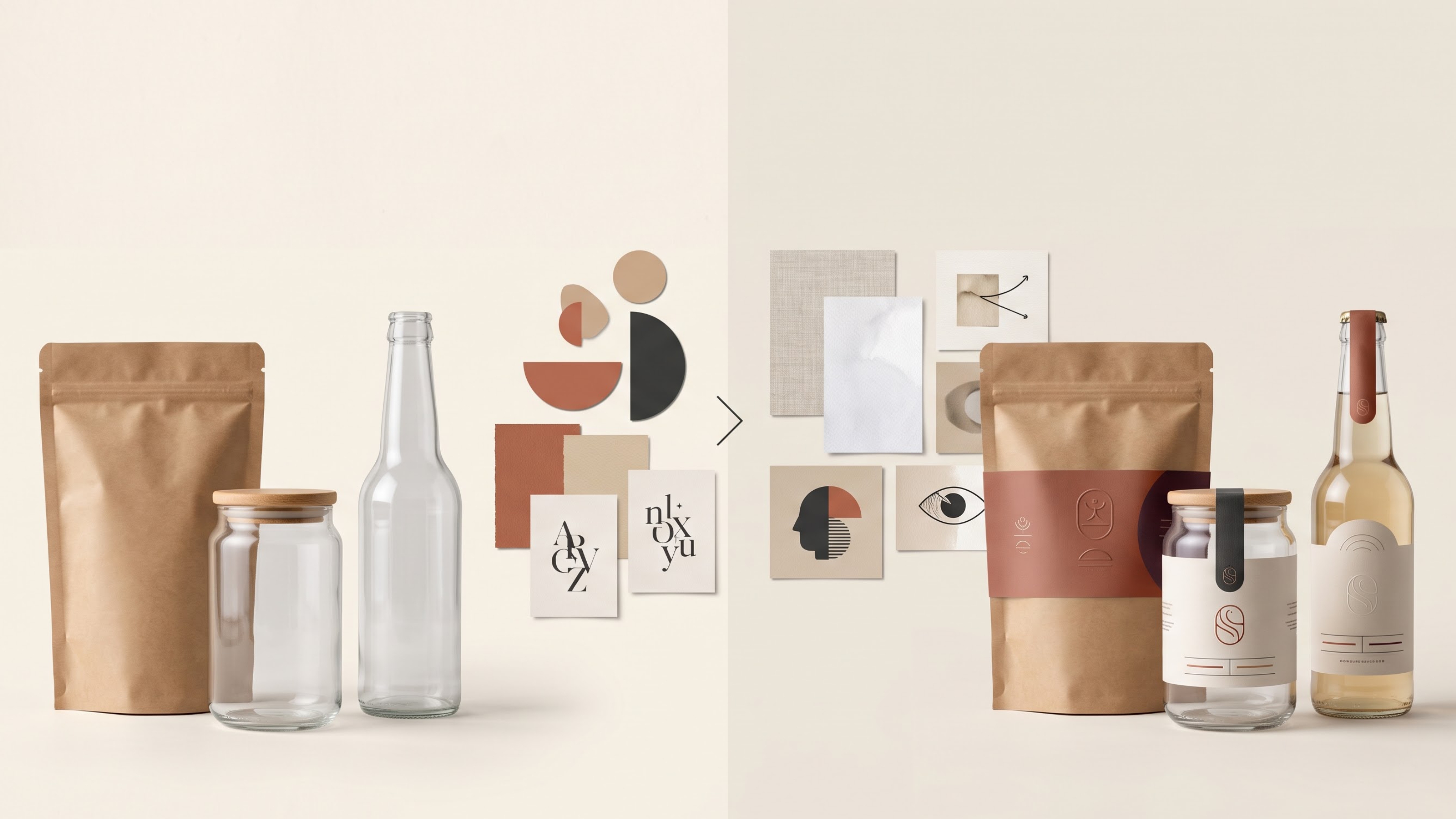
In the FMCG and consumer product industry, it’s a critical difference. Shelves are busy, competitors offer similar products, and consumers make snap decisions in the aisles. A great product may get noticed, but only a great brand gets chosen.
Whether you’re launching a food product, personal care, home product, beverage, or another consumer product, successful FMCG branding needs more than a nice logo.
It’s the creation of a consistent experience — from manufacturing, packaging to distribution, retail, and ultimately — your consumer’s hands.
1. Start With the Product — But Don’t Stop There
Any strong consumer brand starts with a product that meets a genuine need.
Before you think about marketing and social media, you must understand what your product offers.
Questions to ask yourself may include:
• What need is the product intended to meet?
• Who is the target audience for the product?
• What makes the product stand out?
• Why choose this product?
• What benefit does the consumer clearly recognize?
For example, when launching a food product, you could focus on competing on taste, ingredients, convenience, quality, tradition, nutrition, or affordability.
The product sets the foundation. The brand strategy determines how that foundation is perceived.
2. Define Your Brand Positioning
The next step in your FMCG brand strategy is positioning.
Positioning answers the simple question — why should consumers remember and choose this brand?
Your positioning should be formulated in such a way so that it communicates a value that your consumers can quickly identify with.
A brand could position itself as premium quality, affordable, natural, convenient, innovative, traditional, healthy, sustainable, family-friendly, and so on.
The idea is to carve out a space in the mind of the consumer and build around it, consistently.
3. Bring Your Brand Identity to Life
Your brand identity is the embodiment of your positioning.
It includes your name, logo, colors, fonts, packaging, photography, illustrations, tone of voice, taglines, and messaging.
For FMCG products, the visual identity is of particular importance because your consumers are interacting with your product in a highly competitive space.
A strong, unique color system, recognizable font, a memorable packaging structure, and well-crafted communication will enable a consumer to find and identify with your product far quicker.
Good design should not simply look nice. It should convey the brand’s personality and promise.
4. Packaging is Your Silent Salesperson
For many FMCG products, the packaging is one of the most important elements of product branding.
Before tasting your product or experiencing your service, the consumer has already interacted with your product packaging.
The packaging must fulfill a number of simultaneous goals:
Attract → Communicate → Differentiate → Inform → Build Trust
A food packaging, for example, must communicate the product’s name, flavor, ingredients, quantity, benefits, usage instructions, and include the required information, all while having a distinct visual hierarchy.
The packaging should be able to stand out on a supermarket shelf or local retail store, as well as look appealing in an e-commerce listing or when delivered to the doorstep of a consumer.
5. Think Beyond Branding: The Product Journey
A successful consumer brand doesn’t start when a customer sees your advertisement. It starts much earlier — when the potential customer has a product in their hands.
Consider the complete journey:
Manufacturer → Quality Control → Packaging → Warehouse → Distributor → Retailer/E-commerce → Consumer
For imported products, the journey may also be:
Manufacturer → Export → Import → Customs/Compliance → Warehouse → Distribution → Retail/E-commerce → Consumer
Each leg of the journey plays a role in the consumer’s perception of your brand.
If the product is of good quality but the packaging was damaged, the consumer would blame the brand. If the distribution is done poorly, the retail partner may stop prioritizing the product. If the online description of the product is poorly made, it will turn consumers off.
This is why modern FMCG marketing must be connected with operations.
6. Consistency Builds Trust
Imagine seeing a product with one set of colors on a supermarket shelf, a completely different visual language on Instagram, and yet a third one on a website. Even if you like the product, you may feel as if you’re interacting with a number of different brands.
Strong consumer branding will keep you consistent across:
• Product packaging
• Website
• Social Media
• Advertisements
• Retail Displays
• E-commerce listings
• Distributor materials
• Promotional campaigns
• Customer Communication
7. Create a Story Consumers Can Relate To
Consumers will typically not remember a product’s specifications, but they may remember a story.
A story can come from the founder’s journey, a traditional recipe, a manufacturing philosophy, a quality commitment, a certain sourcing process, a problem the company wanted to solve, an innovation that drove the product category forward, and others.
The story of a food brand often comes from ingredients, heritage, preparation, and how it marries with the convenience of today.
The idea is to relate the product to a story that resonates — without making it up solely for the sake of branding.
Authenticity is key. The strongest stories are the ones that come from what the company does.
8. Make Quality Part of the Brand
While marketing can drive the first sale, quality makes people return.
It is even more important in the FMCG space, because the consumer can easily compare products and choose based on experience. If the consumer was promised one thing but gets a different experience, the brand will lose credibility.
Therefore, the branding should be closely connected to:
• Manufacturing standards
• Quality of ingredients/materials
• Quality control
• Quality of packaging
• Quality of storage
• Quality of logistics
• Quality of customer service
A strong brand is not only well marketed but consistently delivers on its promise.
9. Combine Retail, Digital, and Direct-to-Consumer Marketing
Modern FMCG brands have the opportunity to market to their consumers across a variety of touchpoints.
Traditional retail can help to get the product seen and available.
E-commerce can make the experience frictionless and accessible.
Social media helps to build awareness and community.
Search marketing can find those that are actively looking for a product or solution.
Influencer and content marketing can show how a product can enhance life or be used in practice.
Direct-to-consumer engagement can help to understand the customer better.
The idea is to create a united front, leveraging the individual opportunity of each channel, rather than seeing them as separate marketing activities.
10. Measure More Than Sales
While sales are a great indicator of success, a growing brand must measure more than just sales.
Other useful indicators may include:
• Brand awareness
• Repeat purchases
• Customer retention
• Distribution reach
• Retail availability
• Online conversion rate
• Customer reviews
• Average order value
• Campaign performance
• Customer acquisition cost
From Product to Brand: Build the Experience
A product can be manufactured in a factory. A brand is built through thousands of consumer experiences.
From the quality of the product to the presentation on the shelf, from the timely delivery by a distributor to the experience on the website, everything contributes to the consumer’s perception of your company.
This is why successful consumer product branding should not only focus on the creation of a logo or a short-term marketing campaign. Instead, it should bring together product, positioning, packaging, supply chain, distribution, marketing, retail, digital presence, and customer experience into a unified brand system.
The ultimate goal: not only to make a product that people can buy, but to build a brand that people can recognize, trust, remember, and choose.
