
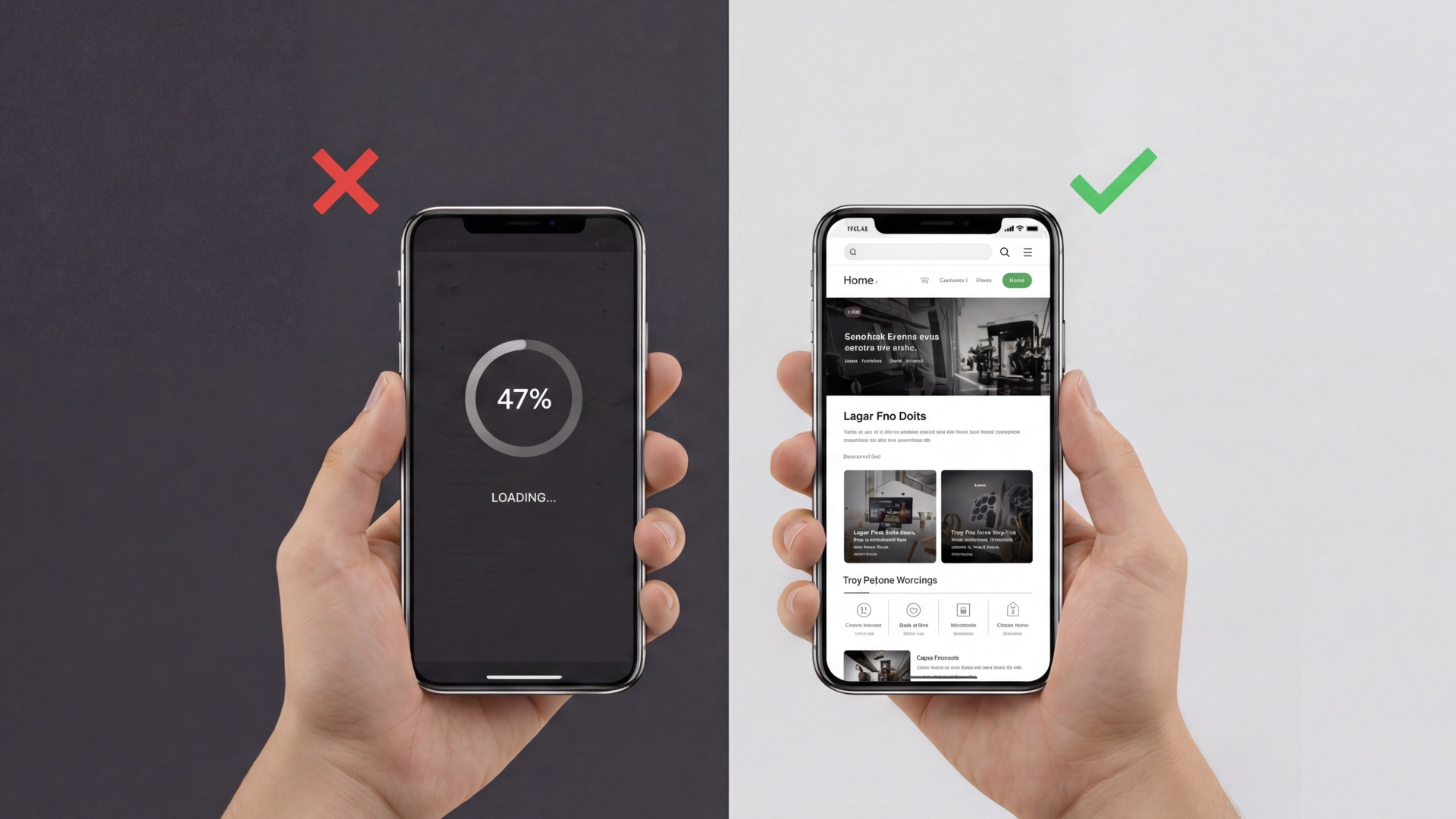
Most website owners don’t think their site is slow. They can see it load eventually, then the pages open and the images show up. Nothing seems broken and hence it’s easy to assume everything is fine. But “eventually” is exactly where the problem begins. Because in today’s world, slow does not mean broken. Slow means ignored.
People don’t wait anymore. They don’t analyse or even complain. They simply leave. And most non-tech business owners never even realise it’s happening. Your website might be slower than you think, and the signs are often quiet.
When people imagine a slow website, they picture a blank screen, a loading spinner, or something clearly wrong. But modern website’s slowness is far more subtle. Well here, the page loads, but the text appears before the layout settles. Images load one by one instead of smoothly. Buttons respond with a slight delay and the site feels heavy, even if it looks clean.
These tiny delays seem harmless. But together, they create friction. And friction makes people uncomfortable, even if they can’t explain why. Most visitors won’t say, “This site is slow, instead they’ll just close the tab.
Website speed used to be something developers worried about. Servers, Code, Hosting. All technical, all behind the scenes. That has changed. Speed is now a business issue. A trust issue. A conversion issue.
A slow site feels unprofessional. It feels outdated and quietly conveys visitors that if the website feels careless, the service might be too. Non-tech owners don’t need to understand code to understand this feeling. They’ve felt it themselves while browsing other sites.
Many business owners invest in design first. A good-looking website feels like progress. And design does matter. But design without performance is like a beautiful shop with a jammed door. The surprise usually comes later. The bounce rates are high, inquiries are low and people most often say they “visited” the site but don’t remember much about it. Even ads don’t convert the way they should. The site looks fine, so the problem is assumed to be marketing, messaging, or pricing. Speed rarely gets blamed, even though it’s often part of the issue.
This is where web tech quietly steps in, not to confuse but to fix.
Common causes of slowness include:
• oversized images that were never optimised
• too many scripts running at once
• outdated themes or plugins
• cheap or overloaded hosting
• no caching or poor caching setup
• bloated page builders
• animations that look nice but load slowly
None of this is obvious to a non-technical eye. And none of it means the site was built “wrong.” It just means it hasn’t been tuned for real-world performance.
Here’s the part people don’t expect. Fixing speed does not always mean rebuilding everything.
In many cases that we, Asense Branding, a Branding Agency based in Rajkot have solved is about cleaning, simplifying, and optimising what already exists. This is why non-tech owners often love speed-focused web tech improvements. The changes feel practical, not overwhelming. Pages load faster without changing how they look. Forms respond instantly. Navigation feels smoother and mobile performance improves noticeably. And suddenly, the site feels lighter, calmer and more trustworthy.
A large portion of visitors are on mobile, even for businesses that assume their audience uses desktops. Mobile connections are less forgiving. A site that feels “okay” on a laptop can feel painfully slow on a phone and Google notices this too. Modern web tech focuses heavily on mobile optimisation, often improving speed simply by prioritising what loads first and what can wait. This doesn’t require technical knowledge from the owner. It just requires the right decisions behind the scenes.
Google doesn’t just look at what your site says. It looks at how it behaves. If users leave quickly, Google assumes something isn’t right. If pages take too long to load, rankings quietly suffer. If mobile performance is weak, visibility drops.
Speed has become part of credibility. Non-tech owners don’t need to track these metrics daily. But they benefit when the foundation is strong.
Web tech fixes that feel human, not technical
The best web tech improvements are invisible. They don’t add complexity. They remove friction.
Things non-tech owners usually notice after optimisation:
• the site “feels faster”
• fewer complaints about loading
• better response from ads
• higher engagement
• improved confidence sharing the site
And perhaps most importantly, peace of mind. You stop wondering whether your website is quietly costing you opportunities.
When speed improves, content gets the space it deserves as visitors would actually read. They scroll instead of skim and interact rather than hesitate. A fast site gives your message room to breathe. It lets design, content, and intent work together instead of fighting against load time. This is where technology quietly supports creativity.
Optimising a website is not about chasing perfection scores. It’s about respect.
Respect for people’s time.
Respect for their attention.
Respect for how they experience your brand.
Non-tech owners often appreciate this framing. Speed isn’t a technical flex but a service decision.
The quiet truth
Most websites are not slow enough to feel broken. They’re just slow enough to lose people and that’s why speed matters more than many realise.
If you’ve ever felt that your website looks good but doesn’t quite perform the way you expect, it might be time to look at speed through a simpler lens. A few thoughtful web tech improvements can make a bigger difference than you think. And sometimes, clarity starts with a conversation.
