
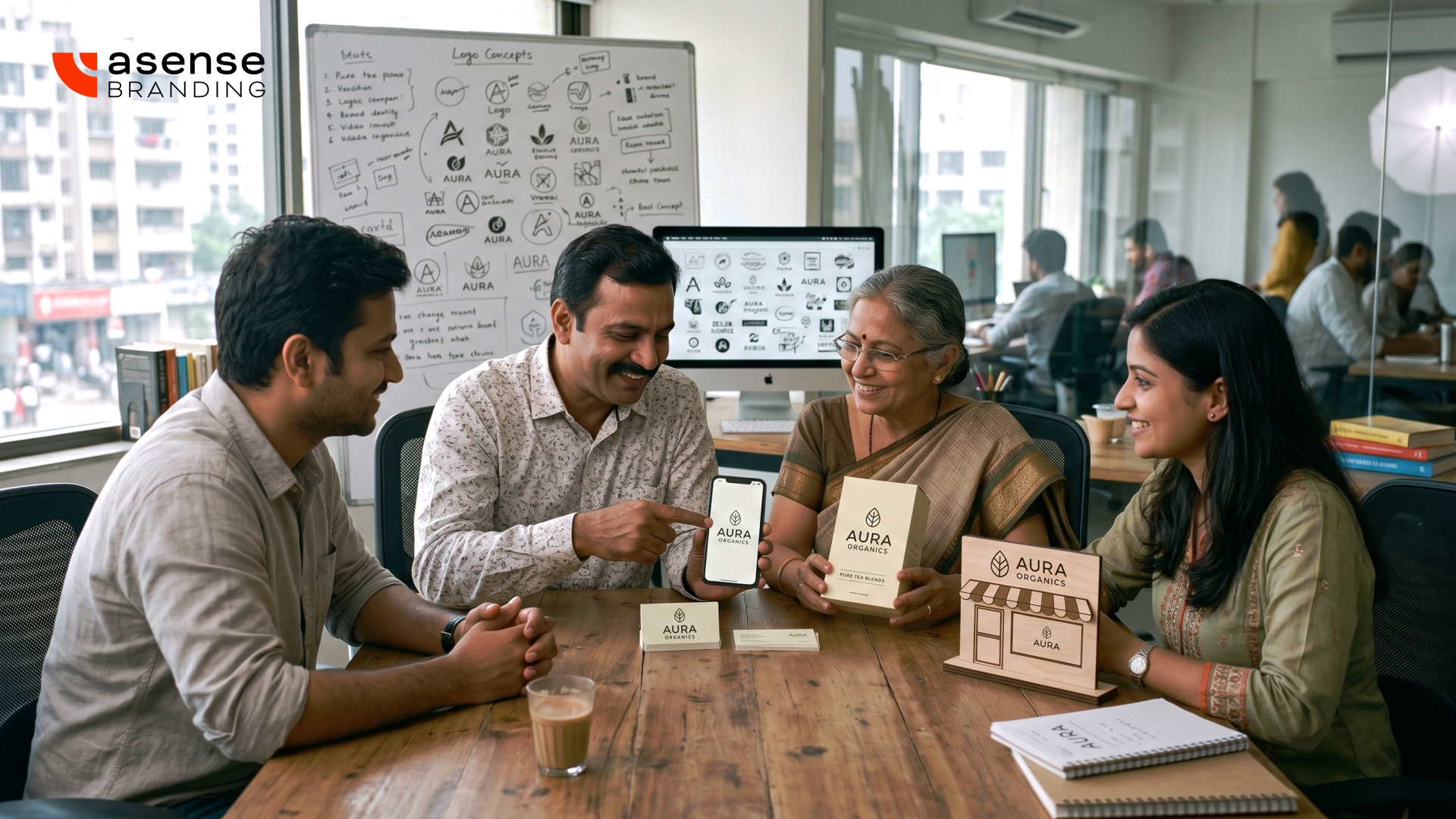
Every business has a “good-looking logo”. From local cafés to multinational tech companies, every logo has a distinct message and meaning. It should have clean typography. Modern design. Colors, psychology, and Professional presentation. But the logo is not the whole brand! Then what is the brand? Brand is the emotional connection that you build, the experience you provide, the clear message that you convey, the market-fit product that you invent, and your brand essence that defines trustworthiness.
Branding = perception: How customers see and feel about your brand in their mind.
Too many businesses still struggle to build real customer loyalty and long-term credible interaction.
Because just a beautiful, attractive logo is not the same as a trusted brand, a logo attracts, but a brand attaches. It should include satisfaction with the service and emotional interpersonal interaction as well to be trustworthy.
Here we go with the logo psychology, a strong branding strategy, and proper branding services make a real difference.
A small misconception in modern business branding. Companies spend a good amount of time perfecting visual identity but spend very little time understanding customer needs, heartwarming, beautiful interaction, and real-world branding.
A small coffee shop in LA once hired a designer to create a premium-looking logo. The logo was sophisticated, matte black colors, minimal typography, and a stylish symbol that looks like international café brands.
At that time, when the owner launched the business, people appreciated the design instantly.
“Your branding looks amazing, decorative, and interesting,” customers said.
But within the first few months, repeat customers were low.
The owner is upset and tense because, visually, everything looked perfect.
Then he observed insight silently and realised.
The café staff behaved differently every day, not considering the process properly. Unaware of brand culture and workplace attitude, the service experience lacked consistency. Also, the inclusion of Social media communication felt distant and artificial. The packaging looked luxurious, but the customer experience lacked uniqueness.
But it lacks trustworthiness.
This is a general scenario for many businesses today. They focus heavily on appearance but mistake emotional attachment.
Customers don’t Trust Design Alone; you have to be branded.
The people are emotional decision-makers. They are people with big hearts.
People are premium.
People may notice a logo with their eyes and be willing to enter a business, but they trust a brand through perfect product, service, and business experiences.
A customer’s experience memory makes you remember:
Logo
• feelings of the business with you
• Whether your service felt genuine
• your service stayed consistent
• Whether your brand promises matched ground
This is where logo psychology becomes impactful.
Every visual element creates conscious meaning.
For example:
• Blue often creates feelings of trust, peace, loyalty, and competence.
• Black may communicate luxury, security, or authority.
• Rounded shapes feel more welcoming and more engaging.
• Sharp edges can feel aggressive or bold
• Minimal typography often feels up to date and premium
But psychology alone cannot save a weak business service experience.
A logo can attract attention for seconds and can purchase ones, but for repetition and reference, you must brand your business with ethical services.
Trust is built over time.
Trend-Based Branding makes businesses common as usual, but instead of building an Owen brand identity, it will be the trend by itself.
A shoe company startup in NY once changed its logo three times in two years because the founder wanted to “look futuristic.”
First came a dynamic logo style.
Then, a mascot logo design.
Then a minimalist logo.
The business kept redesigning visuals, but customers became confused. The brand looks constantly changing.
When branding changes too often, customers lose familiarity and get confused.
And familiarity is one of the strongest foundations of brand trust and sales production.
Look at globally trusted companies. Their logos evolve slowly, but their emotional availability remains consistent.
People trust familiarity because it reduces uncertainty and resolves the query authentically.
A strong power branding strategy understands this perfectly.
Branding Is Bigger Than a Logo
Many business owners think branding means:
• A logo
• A color palette
• A business card
• A social media template and marketing
But real branding goes much broader.
Branding is the emotional reputation people carry in their minds after interacting with your business. When they are talking about your service to other people to experience the greatness of your business, that is the branding.
A customer should instantly understand:
• Who you are
• What are you for
• What makes you perfect
• Why should they do business with you?
The reason professional branding agency services are becoming more valuable than ever before is that it has never been like before.
A proper branding agency does not simply “design.”
It studies customer needs and wants, audience psychology, informative communication, market positioning, and emotional perception.
Because successful branding is not just a decoration.
It is strategic psychology followed through.
Real Trust Comes from Alignment and interest.
One of the fastest-growing skincare businesses in India built trust in a completely different way. How are they doing it!
Their logo was simple, charismatic, and extraordinary.
But every customer interaction felt aligned and interesting every time.
Their Instagram posts seem educational and concisely informative.
Packaging matched the brand personality. Globally Export level
.
A quick customer responded and supported me.
Influencers felt authentic and original.
The website tone remained crystal clear and emotionally relevant.
Customers began to recommend the brand organically.
Why?
Because people trust consistency more than curiosity.
When visuals, messaging, and customer experience align together, the brand begins to feel “real and optimistic.”
The emotional authenticity creates long-term love and loyalty.
Many times, Some Expensive Logos Still Fail.
A lot of businesses that spend lakhs on branding still fail to build customer confidence to purchase or to be with you.
Not because the design impression was poor.
But because branding cannot hide the weak fundamentals of the business operating, it presses.
A premium-looking logo cannot compensate for:
• Bad customer service
• Poor communication
• Fake promises
• Inconsistent quality
• Lack of emotional interaction
Customers are smart. They know well what and who they are doing business with.
They can quickly understand when a business focuses more on appearance than authenticity.
The Future of Branding Is Psychological, interpersonal interaction, Not Just Visual graphics.
In the future of business, branding will become less about visual perfection and more about emotional intelligence and intellectual attention.
Businesses that truly grow will understand:
• Consumer emotions
• Trust-building attitude
• proper communication
• Community-driven engagement
• characterize positioning
The logo is light in a room, but it can not turn the tables. A logo is the pinpoint of business, but not the center of branding. It will simply become the symbol of a much deeper emotional relationship. In reality, customers don’t stay loyal to logos; they are with the authenticity of the business. They stay loyal to experiences, emotions, and trust.
And that is the real difference between a business that looks professional and a brand that actually delivers professionalism.
“A logo attracts. A brand attached.”
