
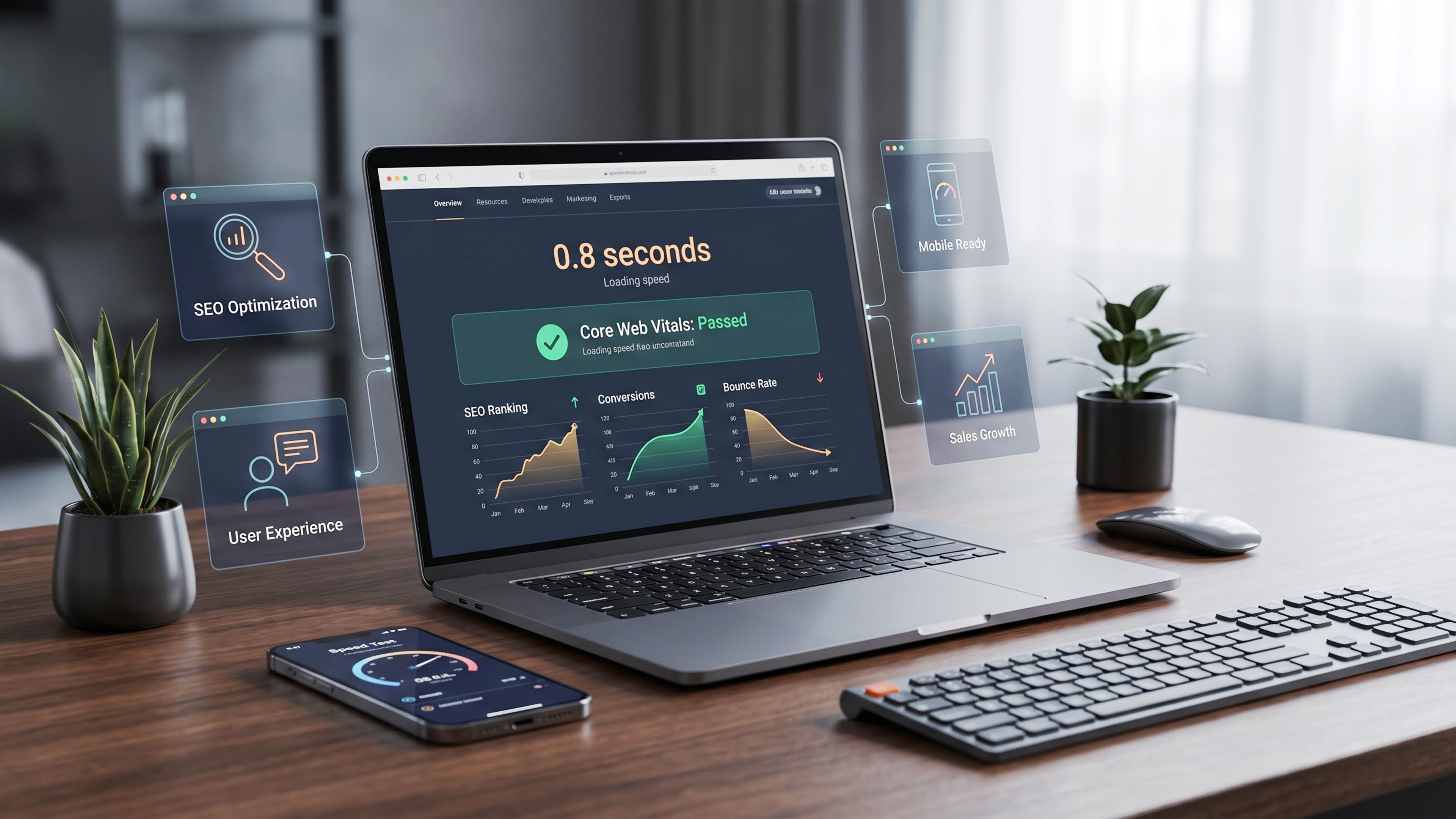
Every time someone comes to your site, waits for some time for it to start up, and leaves before they have any opportunity to see your offerings. There will be no follow ups for it. Absolutely nothing. It happens on thousands of sites every day, and for most companies, it goes unnoticed.
At Asense Branding, we have experienced this ourselves while developing and adjusting sites for companies. With this the speed has turned from being an optional feature to one of the most significant reasons behind the poor ranking of sites, high bounce rates, and missed sales. Let’s discuss why the website speed optimization of your site is so relevant and what you can do about it.
The principal task of Google is to guide people to web pages that provide them with a favourable experience. A page that is slow will do the opposite and will fall low in search results regardless of the quality of any content. Core Web Vitals are Google’s official speed and experience indicators which have been recognised.
This is the reason why we consider website speed among the factors of success alongside great writing while developing digital marketing tools for our clients. You may use the most relevant keywords and most attractive offers, yet if your page loading time is long enough, Google won’t trust your pages.
Core Web Vitals measure three important parameters: the time it takes for the content to load (LCP), the period of time it takes to respond to clicks (INP), and the degree of layout shift (CLS) that happens during loading. Each negative reading of these parameters indicates to search engines that users might experience difficulties while visiting that particular website.
This gathers momentum and increases with time across the entire site. This in return leads to the most well-written articles with SEO optimized to not rank well when competing with other fast websites, regardless of how great the content is.
Think about your Web surfing habits. When encountering a slow-loading page, do you have the patience to wait for it to appear, or do you just quickly click the back button? Most people would go for the second option after just a few seconds of waiting. Slow website loading annoys web users and also impacts their brand perception even before they can see a piece of information.
Good user experience is based on trust, which is built around some basics, namely whether the site works properly, whether it does not look suspicious, or whether it respects the user's time. As a brand strategy, with all the necessary IT and web design support creates an excellent user experience for the online audience.
Business owners need to understand the following fundamental point: the speed of your website has a direct bearing on your revenue. It is known that even a one-second delay in loading the site can lead to lower conversion rates, whether the needed action is a form filled in, a call made, or a purchase carried out.
The truth is that visitors are able to understand whether a web page is trustworthy enough for them to leave their personal data or send money. Companies need to understand why they need a website for their professional development. We observed how these insights applied to our portfolio, including the website we rebuilt for one of our customers having higher loading speed.
Usually, whenever clients complain, small business managers realize that their website is slow, but by that time some money has already been lost. If your website is slow then it is silently losing money leading to a loss in your business. Visitors who leave early become missed inquiries, missed sales, and missed chances to build trust with potential customers.
And you also lose money on ads. If a business runs paid advertisement campaigns for business on a slow website, then it is paying for useless clicks and consequently increases your cost per action. The losses can be quite significant, and they are always easier to avoid than to recover.
The right step is to improve your website speed without having to start from scratch. Below mentioned are some steps you can help you for a faster website:
It’s pivotal to have clear and concise content. Quality content writing can make sure that you stay away from creating unnecessary webpages.
Website speed is not a technical specification hidden somewhere, but a business solution that influences your ranking position, impressions of website users, and the number of conversions. A faster, well-built website will work for your benefit every single day, while a slow one will prevent you from endless opportunities you do not even realize.
If your website is slow and you do not know what to do, Asense Branding will help you improve it. We are experts in website speed optimization and structure, design, and content. Contact us today!
Does website speed really affect SEO rankings?
Google has confirmed that website speed does affect SEO rankings, mainly through the Core Web Vitals, which can measure the loading speed of a website and its responsiveness.
How fast should my website load?
Most professionals recommend a loading speed under three seconds. The longer the load time, the greater the chance for visitors to abandon ship.
Can a slow website really lower sales?
Yes, a slower load speed has been proven to be linked to poor conversion rates. The more time it takes for the website to load, the less trust visitors will have.
Does website speed matter more on mobile?
Definitely, this can have a huge effect. Mobile users use slow connections, and a website that runs perfectly on a PC may load very slowly on mobile.
How can I check my website's current speed?
There are free resources such as Google PageSpeed Insights and GTmetrix that can provide a sufficient speed score along with the necessary suggestions.
